The Science Behind Teeth Whitening: How Peroxide Works
May 26, 2026

Teeth whitening has become one of the most sought-after cosmetic dental procedures worldwide, with the global market projected to reach $8.6 billion by 2026. At the core of most professional and at-home whitening systems lies peroxide-based chemistry—specifically hydrogen peroxide (H₂O₂) and carbamide peroxide. This article delves into the scientific mechanisms, clinical efficacy, safety considerations, and technological advancements in peroxide-based Teeth Whitening, providing B2B professionals with comprehensive technical knowledge for product development and client education.
1. Chemical Mechanisms of Peroxide Whitening
Peroxide compounds work through oxidation-reduction (redox) reactions that break down colored organic molecules in tooth enamel and dentin. The primary chemical reaction involves the decomposition of hydrogen peroxide into water and reactive oxygen species: Primary Reaction: H₂O₂ → H₂O + O• (reactive oxygen radical) This reactive oxygen radical attacks long-chain organic molecules (chromophores) responsible for tooth discoloration through three main mechanisms:- Chromophore Fragmentation: Breaking large colored molecules into smaller, colorless fragments
- Double Bond Saturation: Converting conjugated double bonds (which absorb visible light) to single bonds
- Molecular Oxidation: Changing the electronic structure of pigment molecules to reduce light absorption
2. Hydrogen Peroxide vs. Carbamide Peroxide: Comparative Analysis
While both compounds ultimately release hydrogen peroxide, their chemical properties and clinical applications differ significantly:| Parameter | Hydrogen Peroxide (H₂O₂) | Carbamide Peroxide (CH₆N₂O₃) |
|---|---|---|
| Chemical Formula | H₂O₂ | CO(NH₂)₂·H₂O₂ (urea peroxide) |
| Active Peroxide Content | 100% (direct) | Approximately 35% (releases H₂O₂) |
| Decomposition Rate | Rapid (minutes to hours) | Slower (2-10 hours) |
| pH Stability | Acidic (pH 3.5-4.5) | Neutral to slightly acidic |
| Clinical Applications | Professional in-office treatments (25-40%) | At-home systems (10-22%) and overnight wear |
3. Concentration-Efficacy Relationship
Clinical studies demonstrate a non-linear relationship between peroxide concentration and whitening efficacy:- 10% Carbamide Peroxide: Equivalent to approximately 3.5% hydrogen peroxide; requires 2-6 weeks for noticeable results
- 15-20% Carbamide Peroxide: Professional take-home systems; visible results in 1-2 weeks
- 25-40% Hydrogen Peroxide: In-office professional treatments; significant results in 1-3 sessions
4. Penetration Dynamics and Tissue Interaction
Peroxide molecules penetrate dental tissues through diffusion, following Fick's laws of diffusion. The penetration pathway involves:- Enamel Penetration: Through hydroxyapatite crystal intercrystalline spaces (5-40 nm diameter)
- Dentin Tubule Migration: Through 1-3 μm diameter tubules (20,000-50,000 per mm²)
- Pulp Chamber Diffusion: Limited penetration to vital pulp tissue at clinical concentrations
5. Safety Profile and Side Effect Management
While generally safe when used as directed, peroxide whitening can cause transient side effects:- Tooth Sensitivity (15-78% incidence): Caused by peroxide penetration stimulating Aδ nerve fibers in dentin
- Gingival Irritation (10-50% incidence): Chemical burns from tissue contact
- Enamel Surface Changes: Temporary increase in porosity (reversible within 24-48 hours)
6. Accelerating Technologies and Formulation Advances
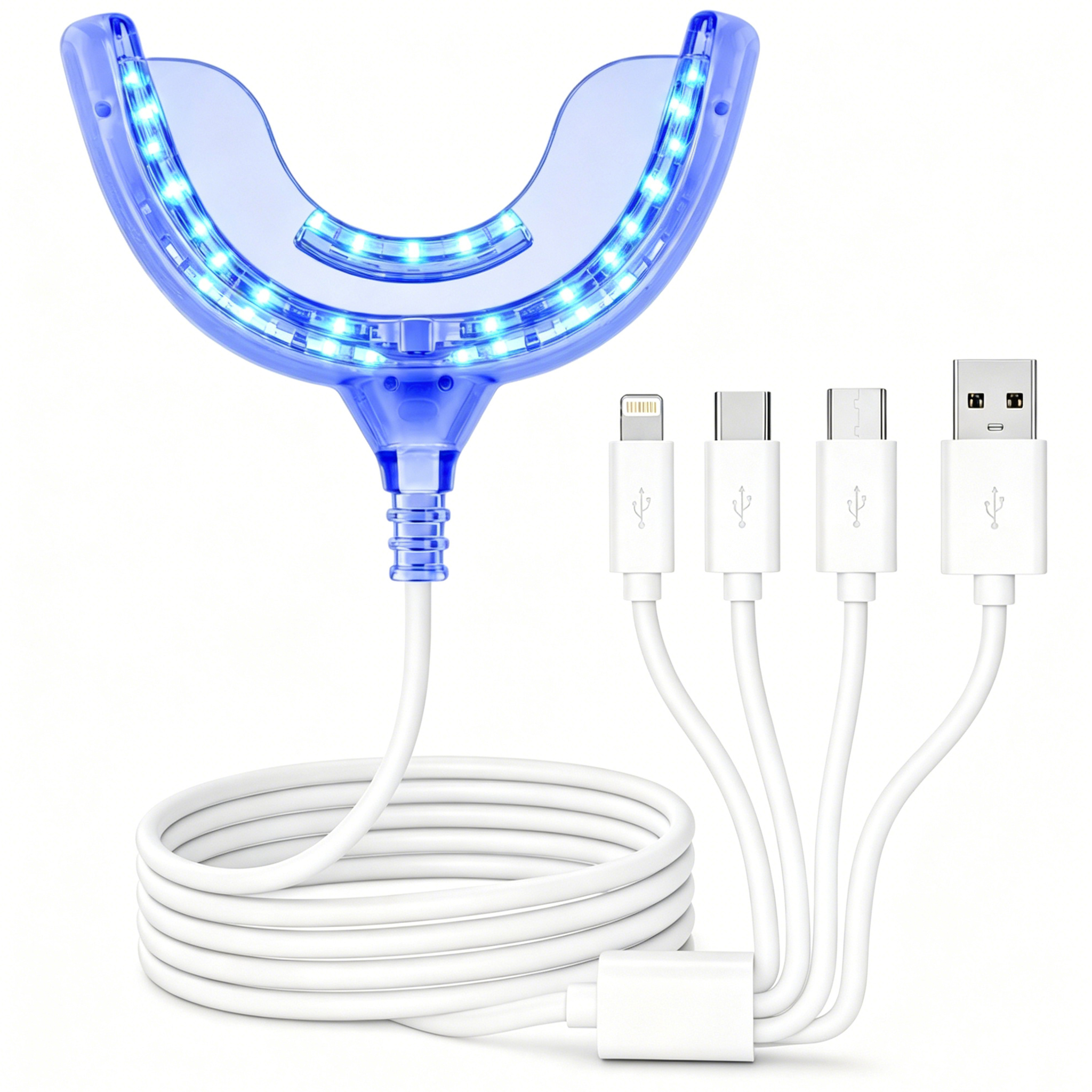
Recent technological innovations enhance peroxide efficacy and reduce treatment time:- LED/Laser Activation: Photothermal acceleration of peroxide decomposition (30-50% faster)
- Nanotechnology: Nano-encapsulation for controlled release and improved penetration
- pH Modifiers: Buffering systems to maintain optimal pH for stability and efficacy
- Viscosity Modifiers (Carbopol, HPMC): Improved tissue adherence and reduced salivary dilution
7. Regulatory Considerations and Quality Standards
Peroxide-based whitening products must comply with international regulations:- FDA Classification: Over-the-counter (OTC) drugs for ≤10% hydrogen peroxide equivalent
- EU Cosmetics Regulation: Maximum 0.1% H₂O₂ in oral products (with exceptions for dental use)
- ISO Standards: ISO 28399:2011 for peroxide content determination
- Stability Testing: ICH guidelines for shelf-life determination under various conditions